
Germany is globally recognized for its high-quality vocational education system, and the Bakery Ausbildung in Germany is one of the most rewarding career pathways for students who enjoy baking, food production, and hands-on work. With thousands of bakeries operating across the country and a growing shortage of skilled workers, Germany continues to welcome international candidates who are willing to learn the trade and build a stable career.
Unlike traditional academic courses, the Bakery Ausbildung follows Germany’s renowned dual vocational training system. Apprentices divide their time between practical work in a professional bakery and classroom-based education at a vocational school. This allows students to gain real-world experience while earning a monthly training allowance.
Key Highlights: Bakery Ausbildung in Germany
- What is Bakery Ausbildung?
- Duration of Bakery Ausbildung
- How Does the Dual Vocational Training System Work?
- What Will You Learn During Bakery Ausbildung?
- Eligibility Criteria for Bakery Ausbildung
- Bakery Ausbildung Stipend in Germany
- Working Hours During Bakery Ausbildung
- Benefits of Bakery Ausbildung
- Conclusion
- FAQs
What is Bakery Ausbildung in Germany?
The Bakery Ausbildung in Germany is a state-recognized vocational training program that prepares individuals to become qualified professional bakers. The program combines structured classroom education with practical workplace training, enabling apprentices to develop technical skills while working in real bakery environments.
Throughout the three-year program, apprentices learn how to prepare a wide variety of baked products, including:
- Traditional German breads
- Rolls and buns
- Cakes
- Pastries
- Croissants
- Cookies
- Artisan breads
- Specialty seasonal baked goods
Students also gain practical knowledge in:
- Dough preparation
- Fermentation processes
- Baking techniques
- Food hygiene
- Quality control
- Ingredient selection
- Production planning
- Bakery machinery operation
- Workplace safety
By the end of the Ausbildung, graduates are qualified to work independently in commercial bakeries, artisan bakeries, hotels, cafés, restaurants, supermarkets, and food manufacturing companies.
Duration of Bakery Ausbildung in Germany
The standard Bakery Ausbildung in Germany lasts three years.
The program follows Germany’s dual education system, meaning apprentices split their time between practical workplace training and vocational school.
| Training Component | Approximate Share |
| Practical Training at Bakery | 70% |
| Vocational School | 30% |
| Total Duration | 3 Years |
In some cases, candidates with relevant qualifications, excellent academic performance, or previous vocational experience may apply for a reduction in training duration, subject to approval by the responsible chamber and employer.
How Does the Dual Vocational Training System Work?
Germany’s dual training system is considered one of the world’s most successful vocational education models. Instead of studying only in classrooms, apprentices learn directly from experienced professionals while receiving theoretical instruction in vocational schools.
Practical Training
Most weekdays are spent working in a professional bakery under the supervision of qualified bakers.
Typical responsibilities include:
- Preparing dough
- Measuring ingredients
- Operating baking equipment
- Baking bread and pastries
- Decorating baked products
- Packaging products
- Cleaning equipment
- Maintaining hygiene standards
- Assisting senior bakers
Vocational School
Apprentices also attend vocational school on designated days or in block sessions.
Subjects commonly include:
- Baking science
- Food chemistry
- Nutrition
- Mathematics
- Production planning
- Hygiene regulations
- Food safety
- Business studies
- German communication
- Environmental sustainability
This balanced approach ensures apprentices develop both technical expertise and theoretical knowledge.
What Will You Learn During Bakery Ausbildung?
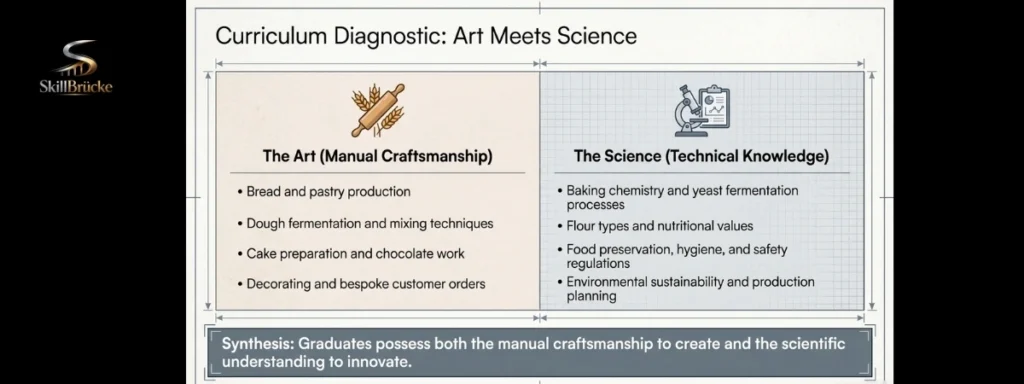
The curriculum is carefully designed to prepare apprentices for professional bakery work.
Practical Skills
Students learn:
- Bread production
- Dough fermentation
- Mixing techniques
- Baking temperatures
- Cake preparation
- Pastry making
- Chocolate work
- Cookie production
- Quality inspection
- Product storage
- Packaging
- Customer orders
- Waste reduction
- Cleaning and sanitation
Technical Knowledge
Students also understand:
- Flour types
- Yeast fermentation
- Baking chemistry
- Food preservation
- Nutritional values
- Temperature control
- Bakery machinery
- Inventory management
- Occupational safety
- Environmental protection
By graduation, apprentices possess both manual craftsmanship and scientific understanding of baking processes.
Eligibility Criteria for Bakery Ausbildung in Germany
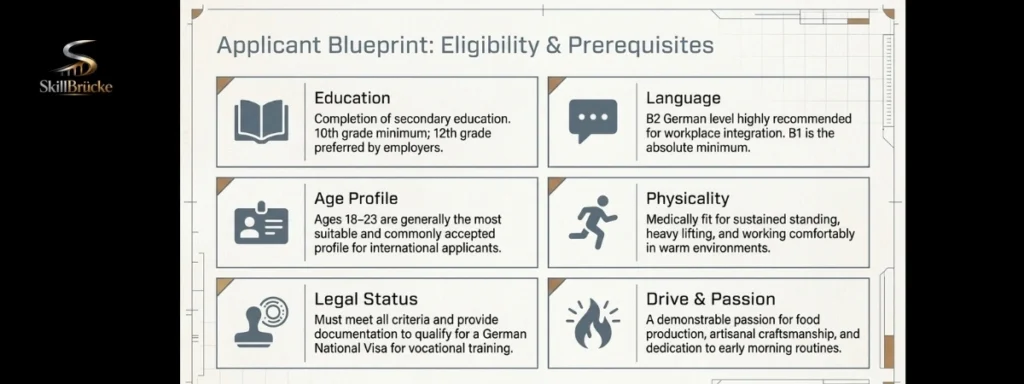
International applicants should generally meet the following requirements:
| Requirement | Details |
| Educational Qualification | Completion of secondary education (10th grade or equivalent); many employers prefer 12th grade |
| Age | Generally, 18 years – 23 is suitable for international applicants |
| German Language | B2 level recommended |
| Medical Fitness | Physically fit for standing, lifting, and working in warm environments |
| Interest | Passion for baking, food production, and craftsmanship |
| Visa Eligibility | Must qualify for a German National Visa for vocational training |
| Clean Documentation | Valid passport and required educational documents |
Bakery Ausbildung Stipend in Germany
One of the biggest advantages of pursuing a Bakery Ausbildung in Germany is that apprentices receive a monthly training allowance throughout the program. Unlike many countries where vocational education requires paying tuition fees, Germany’s dual education system allows apprentices to earn while they learn.
Bakery Ausbildung Stipend (Year-wise)
| Training Year | Average Monthly Gross Salary |
| First Year | €900–€1,000 |
| Second Year | €1,000–€1,120 |
| Third Year | €1,120–€1,250 |
Salary After Completing Bakery Ausbildung
Upon successfully completing the Bakery Ausbildung in Germany, graduates become qualified professional bakers and are eligible for full-time employment.
Starting salaries vary according to:
- Work experience
- City
- Employer
- Bakery type
- Additional qualifications
- Shift work
Average Baker Salary in Germany
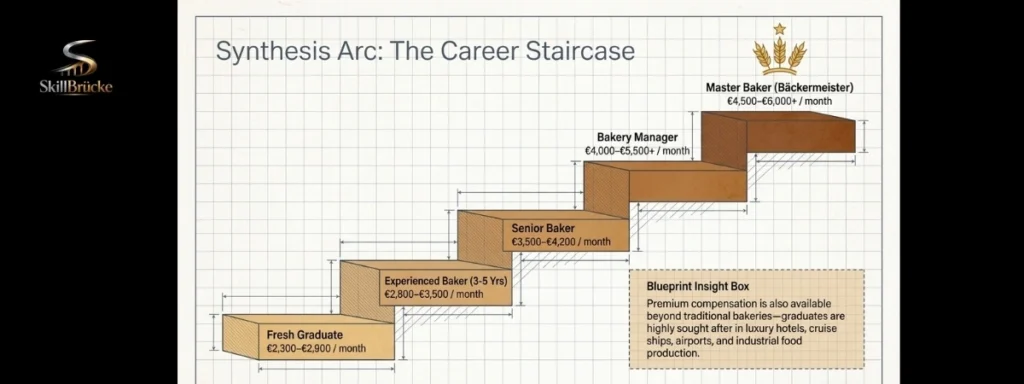
| Experience Level | Average Gross Monthly Salary |
| Fresh Graduate | €2,300–€2,900 |
| 3-5 Years of Experience | €2,800–€3,500 |
| Senior Baker | €3,500–€4,200 |
| Baker Manager | €4,000–€5,500+ |
| Master Baker (Bäckermeister) | €4,500–€6,000+ |
Professionals working in hotels, luxury bakeries, cruise companies, airports, or industrial food production may earn even higher salaries.
Working Hours During Bakery Ausbildung
Bakery work is different from many office jobs because fresh bread and pastries are prepared early in the morning.
Typical working schedule:
| Category | Details |
| Weekly Working Hours | 38–40 hours |
| Shift Pattern | Early morning shifts are common |
| Weekend Work | Occasionally required |
| Overtime | Compensated according to employer policies and applicable agreements |
| Breaks | As per German labour regulations |
Many apprentices start between 2:00 AM and 5:00 AM, depending on the production schedule.
Although the early shifts can be demanding initially, many bakers enjoy finishing work by early afternoon.
Holiday Entitlement
Germany has strong labour protections for employees and apprentices.
Most bakery apprentices receive:
- Approximately 24–30 days of paid annual leave (depending on employer and agreement)
- Paid public holidays where applicable
- Sick leave according to German labour laws
- Maternity and parental benefits where eligible
These benefits contribute to a healthy work-life balance despite the early working hours.
Benefits of Bakery Ausbildung in Germany
The Bakery Ausbildung in Germany offers far more than vocational training. It provides practical experience, financial support during training, and excellent long-term career opportunities.
Major Benefits
- Earn a monthly salary while learning
- State-recognized vocational qualification
- Hands-on practical training
- Strong demand for skilled bakers
- High employability after graduation
- Opportunity to work across Germany
- Career progression into management
- Possibility of becoming a Master Baker
- Opportunity to start your own bakery business
- Exposure to world-class baking techniques
- Internationally respected vocational education
- Potential pathway toward long-term residence if legal requirements are met
Conclusion
The Bakery Ausbildung in Germany remains one of the most promising vocational training opportunities for international students. Germany’s dual education system enables apprentices to combine classroom learning with practical workplace experience while receiving a monthly training allowance. This “earn while you learn” model not only reduces the financial burden of education but also equips students with industry-ready skills.
Over three years, apprentices gain expertise in bread making, pastry production, food safety, quality control, and bakery operations under the guidance of experienced professionals. With Germany’s bakery sector continuing to seek qualified workers, graduates enjoy strong employment prospects in artisan bakeries, hotel kitchens, food manufacturing companies, supermarkets, and international hospitality businesses.
FAQs
Is Bakery Ausbildung in Germany free?
Yes. Most Bakery Ausbildung programs do not charge tuition fees because they are employer-sponsored vocational training programs. In addition, apprentices receive a monthly training allowance.
Can Indian students apply for Bakery Ausbildung in Germany?
Yes. Indian students and other eligible non-EU applicants can apply, provided they meet the educational, language, visa, and employer requirements.
What German language level is required?
Most employers recommend B1 German, while B2 proficiency improves communication, employability, and integration into the workplace.
How long does Bakery Ausbildung take?
The standard duration is three years, combining practical workplace training with vocational school education.
How much salary do apprentices receive during training?
Depending on the employer, region, and training year, apprentices generally receive approximately €900–€1,250 gross per month during the Ausbildung.
Related Post
Hotel management Ausbildung in Germany
Medical assistant Ausbildung in Germany
Dental assistant Ausbildung in Germany
Nursing Ausbildung in Germany